

HPMT Next Generation of Solid Carbide Tooling
Faster. Tougher. Built to Perform.
Cycle time that won’t come down. Chatter the instant a tool reaches deeper into a cut. A carbide bill that climbs with every reorder. These are the constraints machine shops report most often when tool performance falls short of the specification sheet.
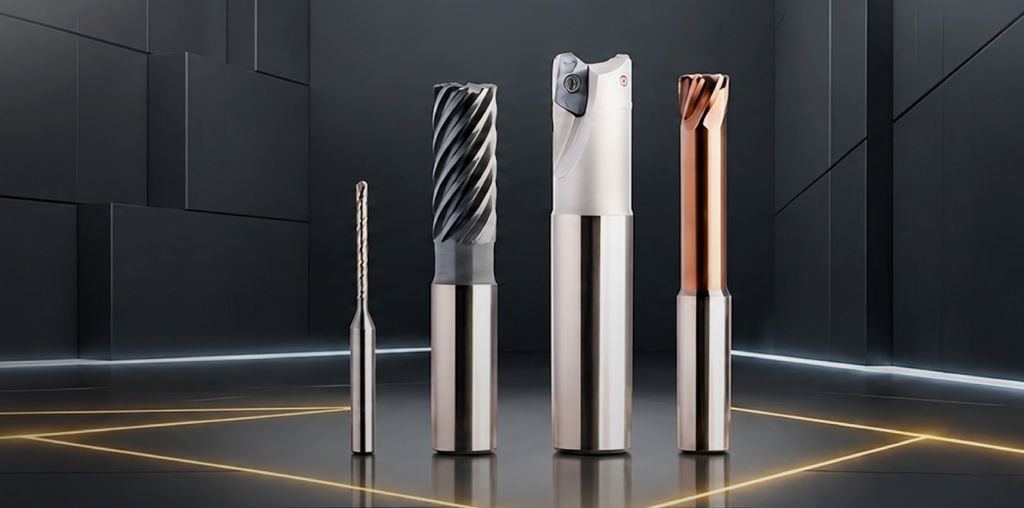
On Wednesday, 21 October 2026, HPMT is launching four new solid carbide product families end mills, drills and indexable inserts its developed against these constraints and validated under production cutting conditions prior to release.
What We’re Unveiling
The following sections outline each product line, the machining constraint it targets, and the result measured in testing.
Multiflute: More Flutes, Faster Cuts
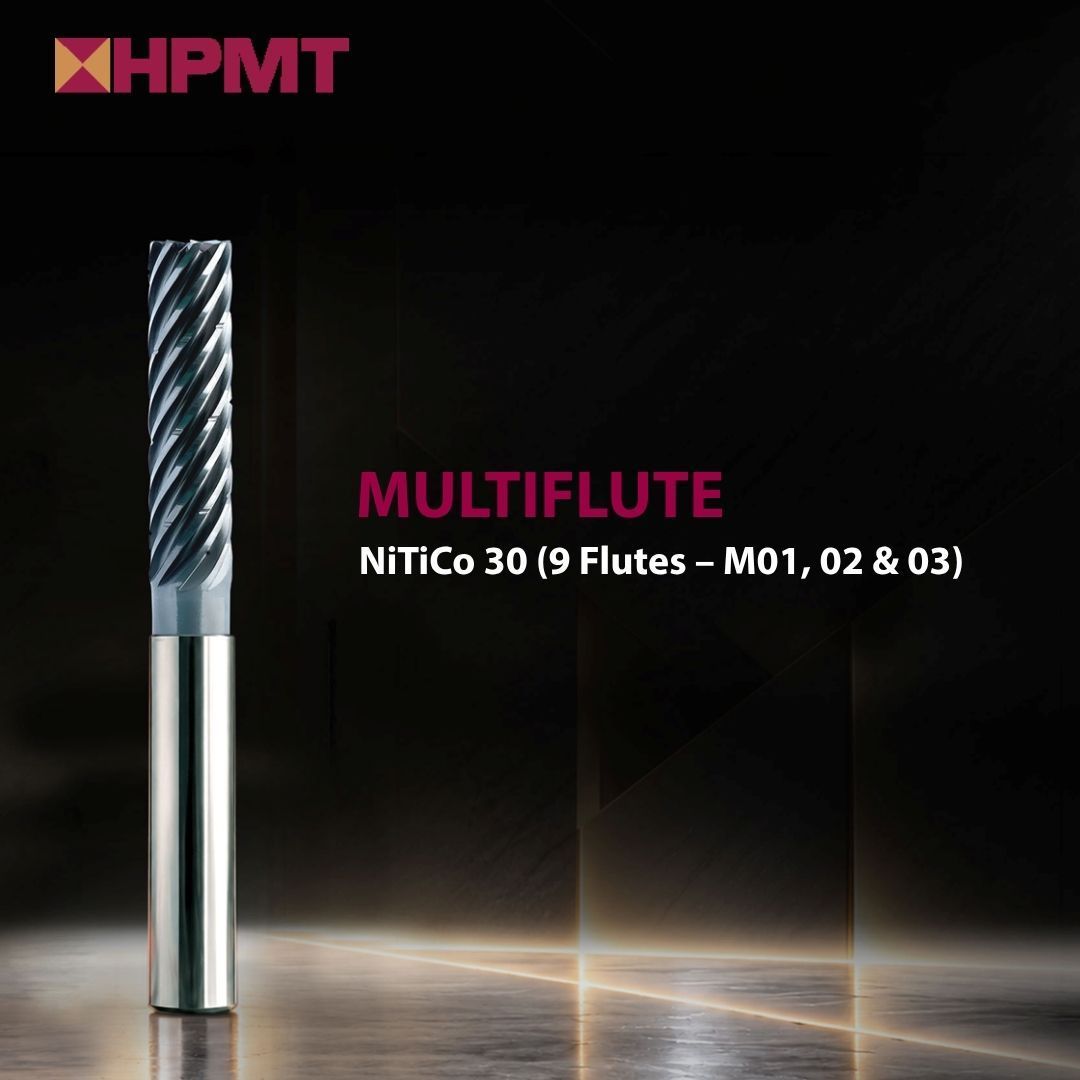
A standard 4-flute end mill is limited by chip load per edge: cycle time plateaus, holding tolerance on larger parts becomes difficult, and surface finish is typically coarser, adding to the secondary finishing workload.
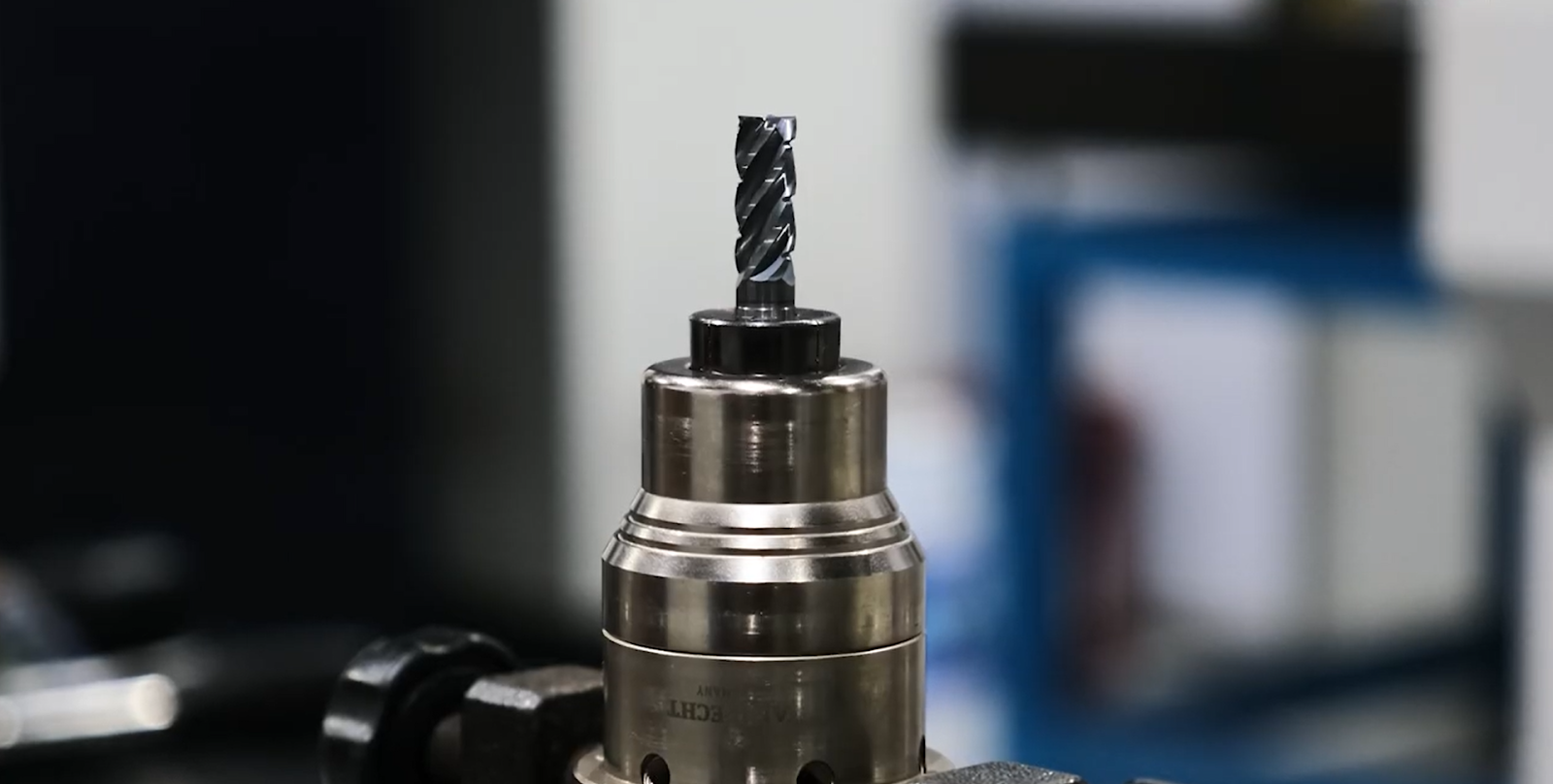
Increasing flute count raises the number of cutting edges engaged per revolution, allowing feed rate to increase without raising the load on any individual edge. NiTiCo 30 extends this to 9 flutes, combined with a chipbreaker geometry engineered for shorter, more consistent chip evacuation. In internal testing, this configuration increased the metal removal rate by 84%, produced the cleanest surface of any flute count tested, cut down the secondary finishing pass rather than eliminating it and more than doubled tool life relative to a standard 4-flute tool.
High Feed: Higher Removal Rates, Lower Cutting Forces
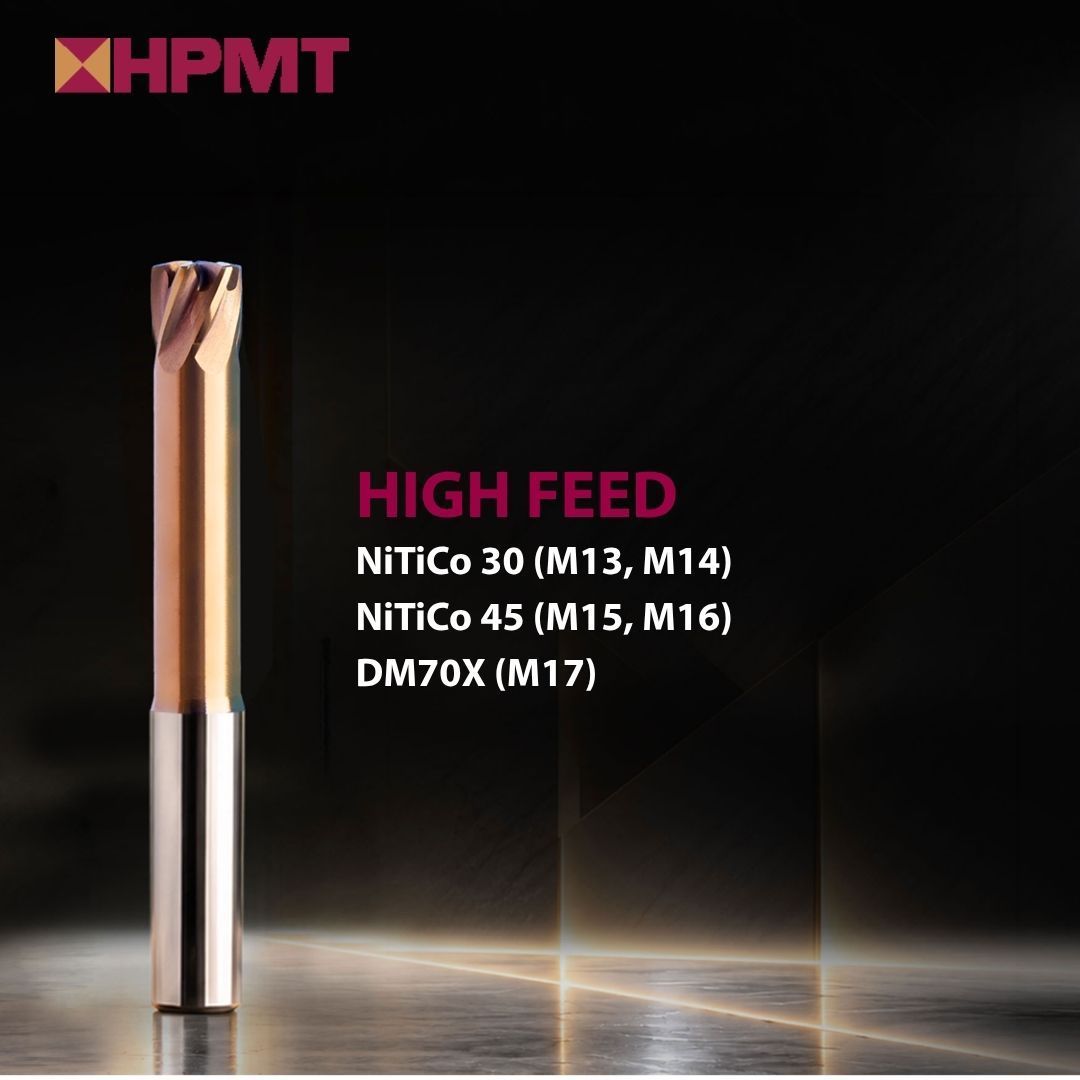
High feed geometry is engineered to address three recurring constraints: extended roughing cycles, deflection in thin-wall sections, and chatter at increased tool reach.
The geometry directs cutting forces axially into the spindle rather than radially into the tool body, maintaining process stability at shallow depths of cut and high feed rates. In internal cavity-roughing trials, this configuration achieved three times the metal removal rate of a standard end mill.
Indexable Insert: Lower Cost Per Part
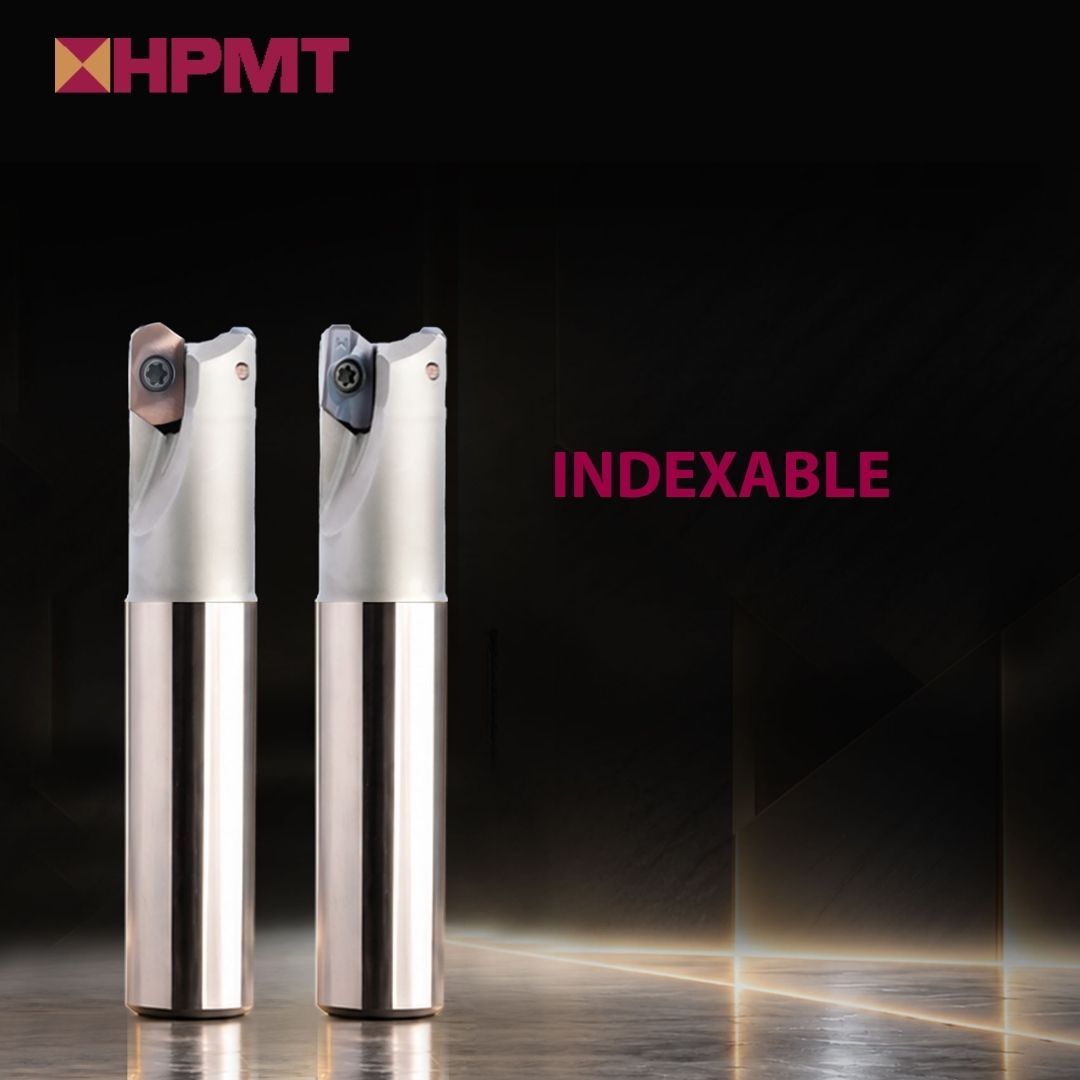
Indexable tooling separates tool body life from insert life: the body remains in service while only the cutting insert is replaced as it wears. This shifts recurring cost from a full solid carbide tool to a lower-cost insert, reducing cost per part on high-volume production.
The new range covers both turning and milling applications shoulder milling, high feed milling and face milling across ISO P, M, K and S material groups. In matched testing, HPMT inserts achieved up to 66% longer tool life than competitor inserts under identical cutting parameters.
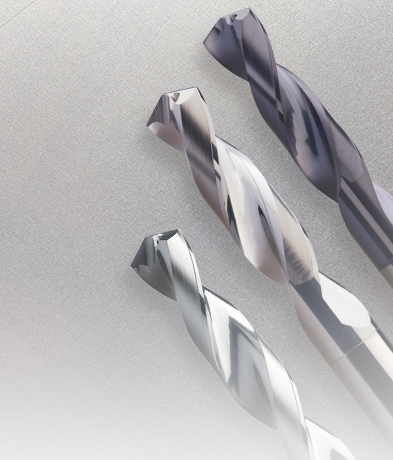
DR-S Mini: Expanded Small-Diameter Drilling
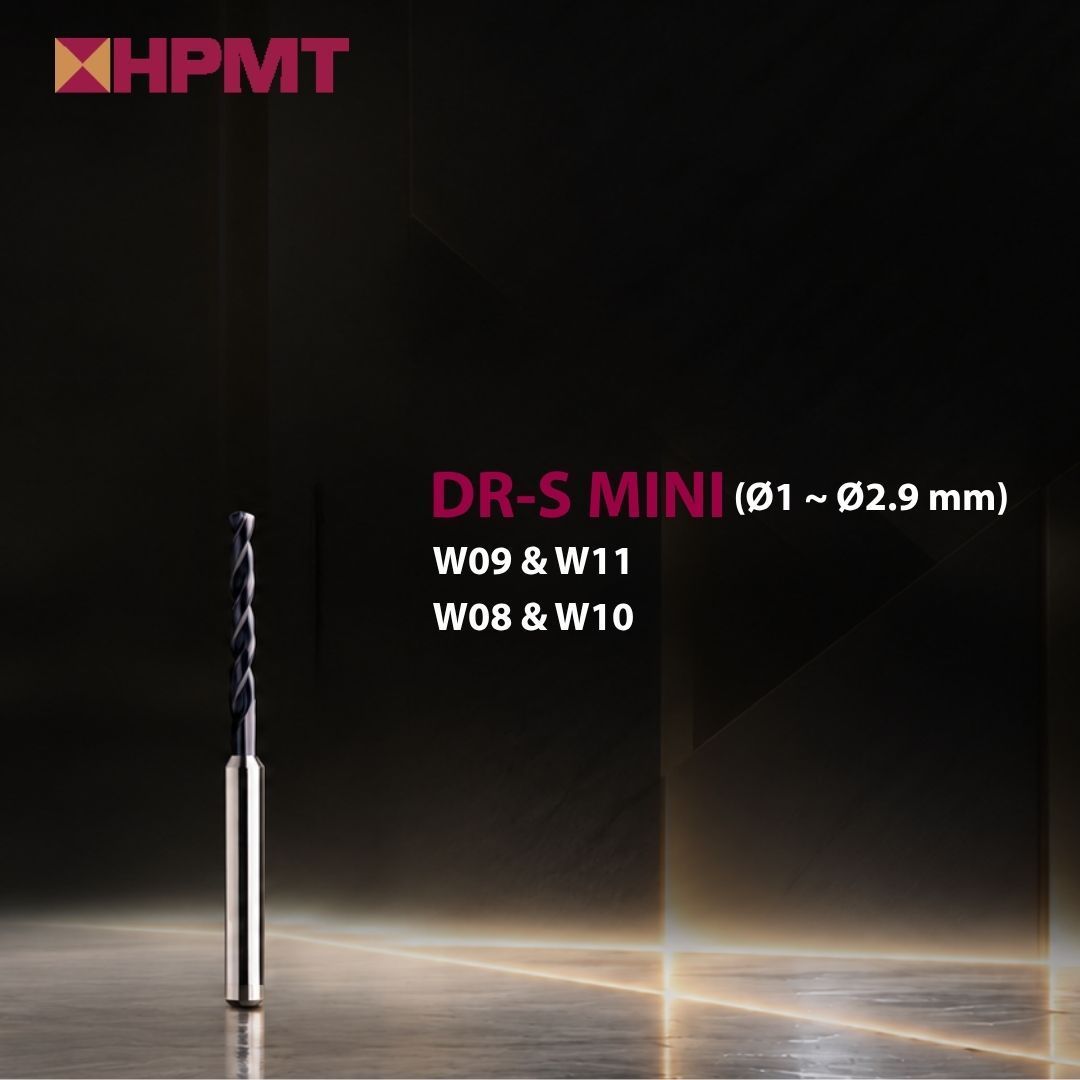
DR-S Mini extends the existing DR-S drilling range to diameters of approximately Ø1–2.9 mm, below the current Ø3–20 mm range. This addresses micro-hole drilling applications that previously required a supplier change or a tolerance compromise. The product is built on the established DR-S platform and is available in 3D, 5D and 12D length-to-diameter ratios.
Built on Real Engineering, Proven Live
HPMT's R&D and Application Engineering team developed and tested every product line in this launch under production-representative cutting conditions. At the webinar, the engineers responsible for this testing will present the results directly — side-by-side roughing comparisons, wear data, and complete case studies — with time allocated for technical questions.
Explore the Full Range
The New Product Webpage is the central reference for this launch. Each of the four lines featured here — Multiflute, High Feed, Indexable, and DR-S Mini — has its own dedicated page with the full specification range, a downloadable product catalogue, head-to-head case study data, and a direct link to technical details. Start at the Hub to see the full line-up, then go to any product page for the data behind it.